
HOLYPHARM

Human Milk Oligosaccharides (HMOs, 2'-Fucosyllactose)
Structure:
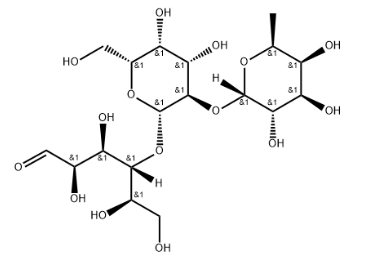
Application:
Infants Nutrition Human milk Oligosaccharides (HMOs) belongs to oligosaccharides, which refers to a class of oligomeric carbohydrates that are linked by 3 to 10 monosaccharide units through glycosidic bonds to form straight chains or branched chains. Its molecular formula can be generally expressed as (C6H10O5) n, n is 3 ~ 10. The sweetness of HMOs is generally only 30% to 60% of sucrose, and it is difficult to be digested and absorbed by the intestine.
HMOs are the third largest nutrient present in breast milk and plays an important role in infant growth and development, they are second only to lactose and fat, and higher than protein (about 10g/L). More than 200 different HMOs have been identified, and each HMO may have a different function. The content of HMOs in colostrum can reach 20-25g/L, and the level of HMOS in mature milk decreases to about 10-15g/L.
HMOs can prevent fatal streptococcal infections in infants, especially lacto-n-difucohexaose, which promotes the production of beneficial bacteria in the gut and prevents GBS infection in newborns;
They can be used as prebiotics to affect the composition of intestinal microbiota;
They can act as anti-adhesion agents or receptor decoys to prevent pathogens such as viruses and bacteria from binding to sugars on the surface of epithelial cells;
They can act as immunomodulators to alter host epithelial and immune cell responses, which has potential health benefits.
Among more than 200 oligosaccharides in human milk, 2'-Fucosyllactose (2' -FL) is the most abundant in HMOs. 2'-Fucosyllactose is produced by microbial fermentation of transgenic E. Coli strains. It is used as ingredients in first-stage infant formula (0-1 years), second-stage infant formula (6 month-1 years), special dietary infant formula, and infant formula supplements.
The addition of HMOs in the current infant formula is not common, but it plays an important role in the growth and development of infants.


